
[wpseo_breadcrumb]

If you have been researching doula training lately, there is one question that usually shows up real quick and can feel confusing from the jump:
What type of doula should I be?
The internet makes this harder than it needs to be. Full stop. One site says birth doula is the only “real” option. Another pushes postpartum as more sustainable and scheduleable (they are not wrong). Then someone mentions death doula work or bereavement doula care and suddenly you are wondering if you missed an entire category of care you did not even know existed.
This confusion is not your fault.
The doula world has expanded quickly, while education has not always kept pace with clarity. Titles overlap, roles blur, and many programs do not actually explain the different types of doulas in a clear, concise and realistic way.
So, let’s slow this down, shall we?
Here are some of the top Qs we get from folks just like you (and we have answers, babes!):
- what types of doula roles exist
- the different types of doulas and what they actually do
- what a birth doula does
- what an after birth doula or postpartum doula does
- what a death doula and bereavement doula do
- and how to think about training options without rushing yourself into the wrong lane
We want to give you the spoiler alert right off the top, there is no perfect niche… there is only the one that fits you and your life right now.
Types of doula roles and why there are more than you think
At its heart, doula work is non-medical care during major life transitions. Birth is the most visible and known and the one people think of when you say you want to be a doula… but birth is not the only moment where people need skilled, compassionate support. All of these transitions used to be done at home and with parents, grandparents, aunties and friends supporting their loved one.
\We have lost this, and now this is a paid job done by those that feel passionate about trauma-informed care and reproductive health and justice.
When people ask about types of doula roles, they are usually asking about scope of care. Where does the support happen? When does it begin, like those 2 pink lines or the test or even before that? When does it end?
So, here are the most common types of doula roles:
- birth doula or labor doula
- postpartum doula or postnatal doula or after-birth doula
- bereavement doula or loss doula or infant loss doula
- death doula
- fertility or conception doula
- abortion doula
- full spectrum doula
Some doulas focus deeply on one area because they get a strong calling to support people going through a certain transition. Others train across multiple areas and practice full spectrum care (here is why we feel it is important). Many people shift over time as their life changes… hello, kids in school full time!
This is normal.
If you want to understand how long training can realistically take and why short programs often fall short, this blog goes deeper into that conversation.

Birth doula training and the role of a birth doula or labor doula
A birth doula supports someone through pregnancy, labor, and birth.
But the real work of a birth doula is not about hip squeezes and foot massages. The gift is about presence, information, advocacy and protection, and emotional steadiness during an intense and vulnerable experience.
So what does a birth doula actually do?
A birth doula offers:
- prenatal education and preparation
- emotional support throughout pregnancy
- hands on comfort during labor
- support with decision making and informed consent
- protection from harm within the medical system – especially from those in equity seeking groups
- postpartum planning prenatally
- birth mate and/or partner(s) support
- sibling preparation
- immediate postpartum grounding
- infant feeding support
- birth processing
- mental health screening in the first weeks postpartum
Birth doulas do not provide medical care. They do not diagnose or treat. Their power lies in continuity of care, advocacy, evidence-based information, and relationship building.
Research consistently shows that continuous labor support improves outcomes. A large Cochrane Review found that people supported by doulas were less likely to have cesareans, less likely to use pain medication, and more likely to report positive feelings about their birth experience.
This matters because birth is not just a physical event. It is a profound emotional, psychological and physiological event that completely reshapes the birthing person’s identity.
A good birth doula training should reflect this complexity. It should include not only physiology, but communication, advocacy, trauma awareness, and real world scenarios. As you can see from the job description of a birth doula, you cannot learn all of this within a weekend.
If you want to explore what clients actually value when hiring a birth doula, check this blog here.
Birth doula work is powerful, y’all. It is also demanding. On call schedules, nighttime labor, and emotional intensity are part of the role. For some people, this is energizing. For others, it becomes unsustainable without strong boundaries and support.
We offer so much boundary support for doulas so that there is more sustainability in their practices.

Postpartum doula, postnatal doula and after birth doula support
A postpartum doula, sometimes called an after birth doula or postnatal doula, supports families once the baby is home.
This role is often misunderstood, even though it may be one of the most urgently needed forms of care.
A postpartum doula supports:
- newborn care education
- infant feeding support
- emotional processing and reassurance
- sleep support (evidence based we hope!)
- light household tasks
- parent confidence and adjustment
- sibling preparation
- scanning for PMADs
- resource set up like lawn care, home care, chiro, therapy and more
- wound care for operative births
- birth processing
- be an adult in the home for the primary parent to talk to
- & more….
Postpartum doulas help families land and settle. They normalize the messy parts and smooth out the bumps. They reduce isolation at a time when many parents feel overwhelmed and unsure. Being a new parent is lonely for a lot of women who are left carrying the majority of the load. Having another adult in the home that you like and trust is so important for mental health and relationships in the postpartum period.
Postpartum mental health challenges affect roughly one in five birthing parents… and we believe that this is under reported meaning that even more people are struggling in the days, weeks and months after birth. Social support is one of the strongest protective factors we have and postpartum doula care directly addresses this gap.
The demand for postpartum doulas is rising fast, which we love to hear, especially as families recognize that birth is only the beginning.
Postpartum doula work is often more predictable than birth doula work. It is usually scheduled rather than on call which can be convenient for doulas with other jobs and young children. For many people, especially parents themselves, this makes postpartum doula care more sustainable long term.
If this path is calling to you, this blog explores why the demand is growing.

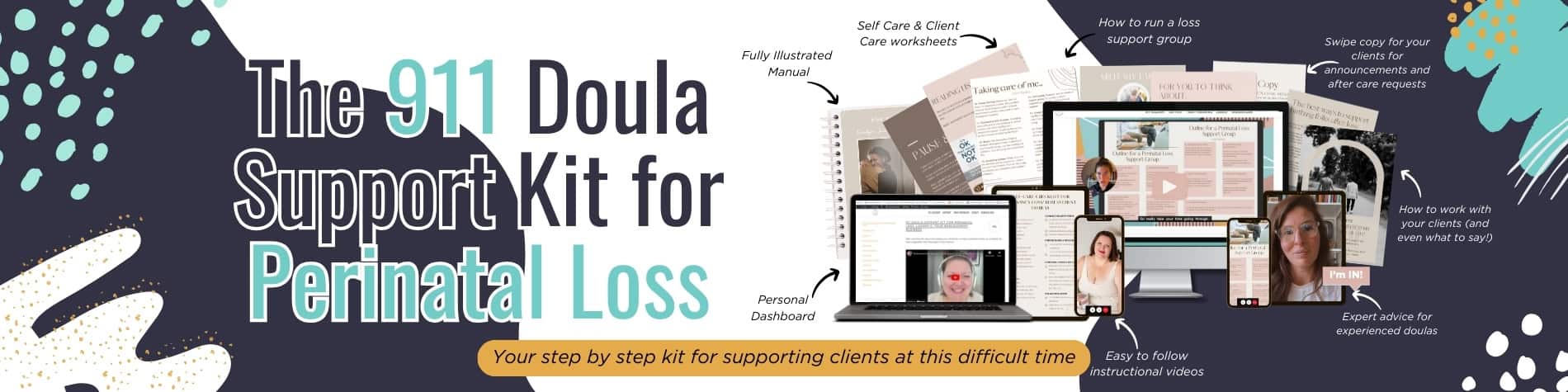
Bereavement doula support and reproductive loss care
A bereavement doula supports people through pregnancy loss, stillbirth, infant death, and reproductive grief.
This work exists because medical systems often struggle to care well for grief. Appointments are short, the language is clinical and support drops off quickly (if it even started). What we have witnessed for our loss clients has been heartbreaking! We have had clients who have lost their babies and waiting for the induction be forced to sit in the waiting room with other people in labor.
Bereavement doulas slow things down and they protect dignity. They help families feel seen during moments that are often deeply traumatic.
A bereavement doula supports:
- families during a loss diagnosis
- labor and birth in the context of loss
- procedure in the case of loss – like calling funeral homes
- memory making and ritual
- emotional grounding and presence
- follow up support and referrals
- fielding questions
- messaging to family and friends
- care over the next year
This work is intense and requires strong training, self awareness, and excellent boundaries. Compassion alone is not enough. Without proper preparation, this work can cause harm to both families and doulas.
For those who feel called to bereavement doula care and are properly trained, the work can be deeply meaningful.
If you want to explore how to support loss without burning out, this blog goes deeper.
What is a death doula?
A death doula, also known as an end of life doula, supports individuals and families during the dying process.
This role focuses on emotional support, presence, advocacy, and meaning making at the end of life. Death doulas are not medical providers. They often work alongside hospice and palliative care teams.
A death doula supports:
- emotional and spiritual processing
- comfort measures and presence
- family education
- legacy and ritual
- planning for death and after death care
As populations age and families become more dispersed, death doula care is increasingly sought out. Many people want alternatives to highly medicalized dying experiences…they want autonomy, dignity, and choice.
Death doula work often attracts people who are grounded, reflective, and able to sit with discomfort without rushing to fix it.
This role is closely connected to bereavement doula care, but they are not the same. One focuses on the dying process for adults while the other focuses on loss and grief in the infant context and within labor and birth.
Different types of doulas and how training fits in
When people ask about different types of doulas, they are often also asking about education.
What types of courses can doulas do?
Common types of training include:
- birth doula training
- postpartum doula training
- bereavement doula training
- death doula training
- fertility and abortion doula training
- full spectrum doula training
Not all training is equal. We want to say this one more time because it is really important. The industry has changed since back in the day with weekend trainings. They are no longer good enough for people to be confident and competent and work in the field. Short programs often focus on rapid fire, high level information without integration.
Real care work education requires reflection, feedback, and skill building over time.
Learning should be effortful because discomfort is part of growth. This is especially true in emotionally complex roles like birth, postpartum, and bereavement support.
If you want to understand why we take a full spectrum approach to education, this blog explains our philosophy.

How to choose between the types of doula roles
There is no quiz that can answer this perfectly. But there are better questions to ask yourself:
Do you need predictable hours or are you comfortable being on call?
Do you feel energized by intensity or steadied by routine?
Are you drawn to beginnings, endings, or the space in between?
What kind of emotional labor can you sustain over time?
Your niche does not have to be permanent. Many doulas shift roles as their life changes. What matters is choosing honestly based on your life and circumstances right now.
Burnout often comes from choosing a role that looks good on paper but does not fit your actual capacity.
If you are early in your journey, this blog may help you avoid common missteps.
You do not have to choose just one forever
Some doulas stay in one lane their entire career. Others move between birth doula work, postpartum doula care, bereavement doula support, and death doula roles over time.
There is no correct path and that flexibility can feel really freeing as you shift and have different needs as a provider.
What matters is education that respects the weight of this work, community that supports you, and training that prepares you for the realities of care, not just the highlights.
If you are feeling unsure, that uncertainty is not a problem. It is part of learning how to listen to yourself.
And that is a skill every good doula needs. #TrustYourGut
If you want to explore training options that honor depth, sustainability, and real world care, you can learn more here.
And if you want more honest conversations about the different types of doulas, burnout, business, and community, our blog is always growing alongside you. You can also email us and we are happy to jump on a call with you to chat: [email protected]



FREE ONLINE MINI-COURSE
BLISS IN BUSINESS RETREAT
Your future is created by what you do today — that's why we created a completely FREE mindset mini-course to help doulas and birth workers find bliss in their business!