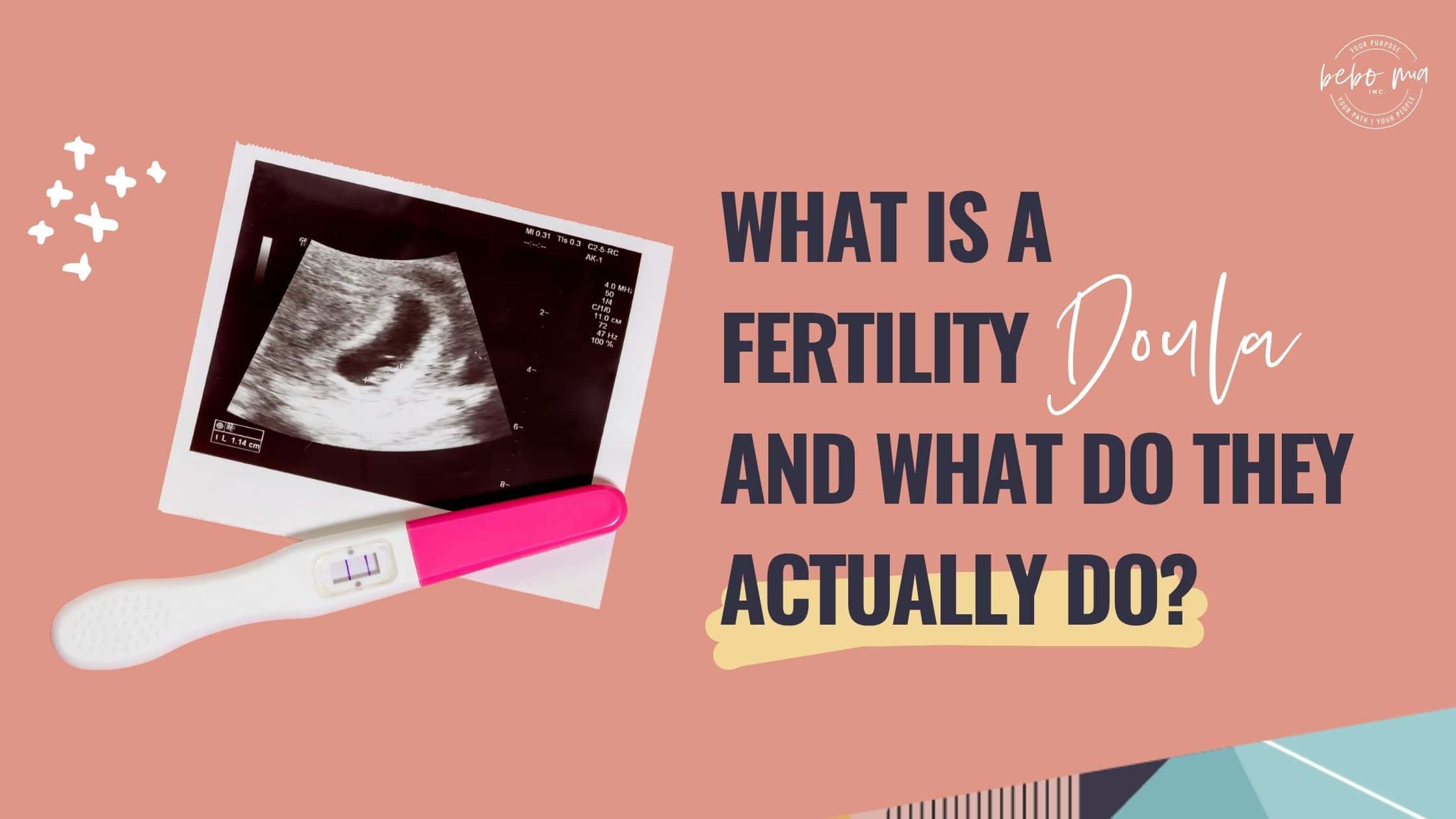
A fertility doula is a trained support professional who supports folks through one of the most emotionally complex and undersupported experiences in reproductive health.
Fertility challenges, infertility treatment, IUI, IVF, egg freezing, donor conception, pregnancy loss during a trying to conceive journey, and the relentless emotional grind of month after month of hoping and grieving when they do not get those two pink lines.
This is not a niche corner of doula work.
Over 2.5 million people are going through assisted reproductive technology right now. Three million ART cycles will happen this year alone. We find the statistic that every 35 seconds a baby conceived through ART is born just wild.
These families are searching for support and coming up short because there are simply not enough fertility doulas to meet the demand.
What does a fertility doula actually do?
A fertility doula uses the same pillars of support that birth and postpartum doulas do. They provide emotional, informational, and practical support to people navigating fertility challenges and treatment. This looks different from birth doula work in important ways and understanding those differences is part of what makes this specialty so powerful.
Fertility doulas support clients through the investigation phase when someone is first trying to understand why conception is not happening. They are present through the treatment decision making process which is often overwhelming, expensive, and emotionally loaded. They provide support during ART cycles including IUI and IVF, through the two week wait, through negative tests, through pregnancy loss, and through the grief that accumulates over months and years of trying.
They also facilitate fertility support groups, offer one on one consulting, and provide education about reproductive health that most people desperately need and are not getting from their medical team alone.

Why fertility doulas matter so much right now
Here is what is happening in the shadows of a lot of people’s lives.
They are going to appointment after appointment. Seeing specialist after specialist. Spending money they possibly do not have on treatments that may or may not work. Sex has become scheduled and strategic rather than intimate. Every period is a loss. Every baby shower invitation is a complicated emotional landmine. Every well-meaning person who asks when they are having kids leaves a wound.
Shame and a sense of failure are among the strongest emotions people trying to conceive report. From a very young age many people have been socialized to believe that having babies is their purpose and their body’s fundamental capability. When that does not come easily the grief is profound and the isolation is real.
And most of them are going through it alone.
The fertility clinic is good at the medical part. They are not resourced to sit with someone through the emotional devastation of a failed cycle or help them navigate the relationship strain that comes with years of trying. That is where a fertility doula comes in.
Why doulas need to understand fertility even if they only do birth work
This is something Bianca, the founder of bebo mia, talks about from deeply personal experience.
One of her closest friends spent six years trying to conceive. Year after year of specialists and healers and hope and loss while her husband had long since checked out of the process emotionally. Bianca, who had gotten pregnant easily twice, did not know what to say. She said many of the wrong things. She listened without really understanding. She tallied up the money her friend was spending and could not connect emotionally to what the journey actually meant.
She looks back on that time with a knot in her stomach. This is so painful to think about how little she knew how to support her friend. She did not have the education or the framework to show up the way her friend needed.
And she saw the same gap in her doula work. A significant number of her birth clients had experienced fertility challenges before hiring her. They would share their stories and she would listen without truly understanding the weight of what they had been through before they even got to her.
Knowing more means doing better. For your clients and for the people in your life.
Even if you only ever do birth or postpartum work, understanding fertility, infertility, ART, and pregnancy loss makes you a more complete doula. Because so many of the people who hire you have a fertility journey behind them that shaped everything about how they are approaching pregnancy and birth.

What do fertility doulas NOT do?
Fertility doulas are not medical professionals. They do not diagnose, prescribe, or replace the care of a reproductive endocrinologist, Ob/Gyn, or fertility clinic. They do not give medical advice about treatment protocols.
What they do is hold the emotional and informational space that medicine does not have time for. They help clients understand their options so they can ask better questions of their care team. They provide a consistent, caring presence through a process that is otherwise extremely clinical and isolating. They hold their client’s hand through their morning appointments.
The scope here is actually a strength. Fertility clinics tend to see fertility doulas as allies not competitors because they lighten the emotional load that clinic staff simply cannot carry. This is a very different dynamic than what many doulas experience in labor and delivery spaces.
What does fertility doula training cover?
A good fertility doula training covers the full landscape of reproductive health including the menstrual cycle and hormonal health, common causes of infertility, ART including IUI, IVF, egg freezing, donor eggs and sperm, surrogacy, and embryo adoption. It also covers pregnancy loss and the specific grief that comes with it, how to facilitate fertility support groups, how to do one on one fertility consulting, and how to build a fertility support practice.
There needs to be a significant focus on mindfulness and reconnecting the mind and body for clients you are working with.
A fertility doula training also makes you significantly more confident in your existing doula work. Again and again bebo mia graduates report that after completing the Fertility Support Specialist Certification they felt more prepared not just for fertility clients but for all of their clients because the education fills in gaps that most doula training programs simply do not cover.

How do fertility doulas find clients?
This is one of the most exciting parts of the fertility doula specialty. The demand is genuinely enormous and the competition is low because so few doulas are doing this work yet.
- Fertility clinics are wonderful referral sources and actively welcome fertility doulas because it lightens the support load for their staff.
- Therapists and counsellors who work with people navigating infertility are strong referral partners.
- Perinatal professionals including midwives, lactation consultants, childbirth educators, and pelvic health physiotherapists often hear about fertility concerns first.
- Pregnancy loss communities and fertility support groups both online and in person are filled with people actively looking for resources.
And your existing clients are a source too. Sadly, secondary infertility is extremely common and a simple check in letting your network know you now offer fertility support will bring people back to you.
Can a fertility doula keep clients through birth and beyond?
Yes and this is one of the best parts of full spectrum doula work.
A client you support through a fertility journey, who then gets pregnant, is almost certainly going to hire you as their birth doula. You already have the relationship, the trust, and the history. They know exactly what it means to have you in their corner and they are not going to want to start that from scratch with someone new.
This is full spectrum doula work in the most meaningful sense. You walk alongside families from the very beginning of their reproductive journey all the way through birth and postpartum. That is a profound thing to be able to offer.

How do you become a fertility doula?
You need training that specifically covers fertility and reproductive health beyond what standard birth doula certification includes. bebo mia’s Fertility Support Specialist Certification is self-study, which means you can move through it on your own timeline. It covers everything from ART and infertility to pregnancy loss, fertility support group facilitation, one on one consulting, and building a fertility practice.
You can find out more here: bebomia.com/fertility-support-specialist/
And if you want to talk through whether this is the right next step for your practice, book a free doula career strategy session or email us at [email protected]. We would love to help you figure out what makes sense for where you are right now.
The families going through fertility challenges need more support than they are getting. You can be part of changing that. Come join us, sweet doula…


FREE ONLINE MINI-COURSE
BLISS IN BUSINESS RETREAT
Your future is created by what you do today — that's why we created a completely FREE mindset mini-course to help doulas and birth workers find bliss in their business!