[wpseo_breadcrumb]
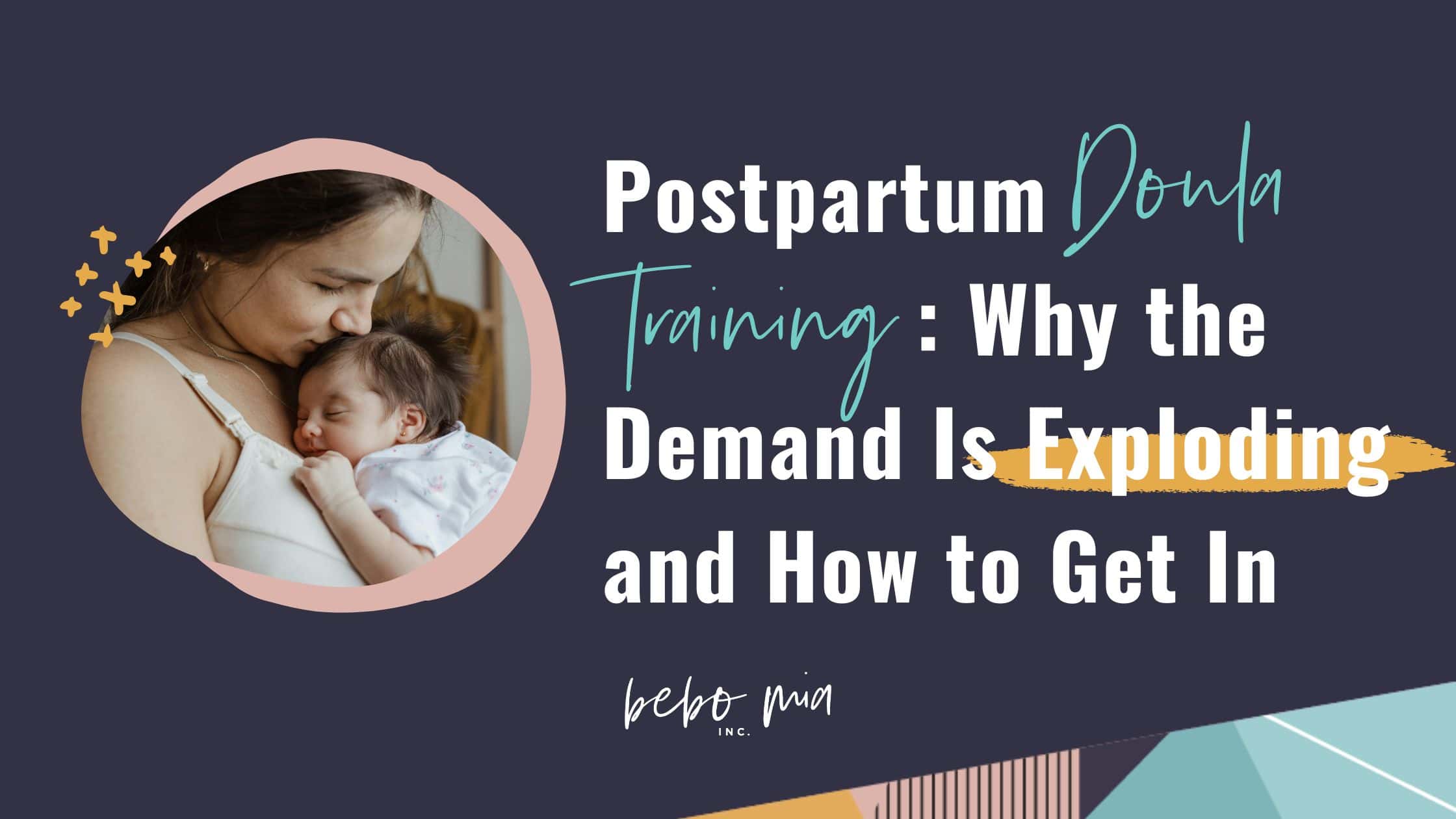
If you have been paying even a little attention to what is happening in families right now, it probably does not surprise you that interest in postpartum doula training is skyrocketing.
Inquiring minds need to know, why are we seeing this trend?
Well, y’all, parents are more isolated than ever and birth is still highly medicalized leading to trauma or at least longer healing periods. Paid leave is inadequate or nonexistent in many places (6 weeks, what?!). Community support has thinned and the expectations of parents have somehow gotten higher while the actual support systems have gotten smaller.
All of this has created a perfect storm, and families are feeling it most acutely in those long and sleepless weeks and months after birth.
This is where postpartum doulas come in. And it is why the demand for postpartum doulas is exploding.
Whether you are already a doula or you are just beginning to explore becoming a postpartum doula, this work matters deeply. This is essential care in a system that routinely fails new parents.
Let’s talk about why the demand is growing, what postpartum doula training actually prepares you for, and how to become a postpartum doula in a way that is ethical, sustainable, and grounded in real life.

Why Families Are Seeking Postpartum Doulas More Than Ever
The postpartum period is one of the most vulnerable windows in a person’s life, and yet it is one of the least supported. Research consistently shows that lack of postpartum support is directly linked to higher rates of postpartum depression and anxiety, lower chest and breastfeeding success for those who want to feed from their body, increased stress in relationships, and long term impacts on parental confidence.
According to the CDC, about 1 in 8 people experience postpartum depression in the United States, with even higher rates among people who experienced birth trauma, infertility, pregnancy loss, or systemic discrimination in care. We want to be very clear here, these numbers are probably significantly higher. There is a lot of under reporting when it comes to postpartum depression and anxiety. Sometimes people don’t understand the way the questions are asked (like, how are you doing?), sometimes people are scared about apprehension if they disclose like Black and Brown families, or sometimes people have had bad experiences with mental health treatments so they don’t report.
Studies published in journals like Birth and Maternal and Child Health Journal show that social support in the postpartum period is one of the strongest protective factors against perinatal mood disorders.
At the same time, parents are often recovering from birth while caring for a newborn without extended family nearby, without paid leave, and without cultural rituals that protect rest and healing (hello, 40 days in bed… where did you go?!). Then there is the expectation that they should bounce back quickly, know what they are doing instinctively, and feel grateful at all times. Yuck to all three!
That expectation is deeply unrealistic.
A postpartum doula fills a gap that the medical system does not address. Postpartum doulas support the emotional, practical, and relational realities of early parenting. They normalize what is happening. They help families rest. They help parents feel capable and confident since there is no such things as the mothering/parenting instinct.
This is why families are actively searching for postpartum doulas and why more people are looking to become postpartum doulas themselves.

What a Postpartum Doula Actually Does
A postpartum doula supports families after the baby is born, usually in the home, during the weeks and months following birth. Their work centers the whole family, not just the baby.
Postpartum doulas support newborn care, feeding journeys, sleep expectations, emotional recovery, and the day to day logistics of life with a new baby. They may help with soothing techniques, infant care education, sibling preparation and integration, light household tasks, meal preparation, or simply holding space while a parent rests or processes their experience. The holding space is such a key part!
Just as importantly, postpartum doulas offer emotional support. They listen without judgment and for some clients, this might be the first time that they have been able to talk and not feel like they need to defend their parenting choices. Postpartum doulas normalize the messy feelings that show up after birth as folks are processing what they recently went through. They notice when something feels off and encourage families to seek additional support when needed. Postpartum doulas have the best little black books full of awesome connections and services to support the new family. They are often the first person to suggest pink flags for postpartum mood disorders or to reassure a parent that what they are feeling does not make them broken.
And to be very clear, postpartum doulas are not medically trained. This is one of the most common questions people ask when they are considering postpartum doula training. Doulas do not provide medical care, diagnose conditions, or replace healthcare providers. The role is non medical, relational, and deeply important. Their presence is so impactful to families during such vulnerable times.

How to Become a Postpartum Doula
If you are wondering how to become a postpartum doula, the short answer is take a doula training, ensure it has mentorship and a strong community. The longer answer is that the quality of your training matters a lot.
Becoming a postpartum doula starts with choosing a comprehensive postpartum doula training program that goes far beyond a weekend overview. Families are inviting you into one of the most tender periods of their lives and you need education that prepares you for the realities of all the moving parts of this.
Strong postpartum doula training includes newborn care education, infant feeding support, realistic sleep guidance and attachment science, postpartum recovery knowledge, and an understanding of perinatal mood and anxiety disorders. It also includes communication skills, trauma informed care, boundaries, and cultural humility. You should be learning how to support families with different identities, structures, and lived experiences.
This is where full spectrum training becomes incredibly important.
At bebo mia, we consistently talk about why full spectrum education makes doulas better at their jobs, even when they plan to specialize. Fertility journeys affect pregnancy. Pregnancy experiences affect birth. Birth experiences shape postpartum healing. When you understand the full arc of reproductive care, you are better equipped to support families in the postpartum period with depth and compassion.
If you want to explore this more deeply, our blog How Long Does It Take to Become a Doula and Five Questions to Ask Before Signing Up for a Doula Course both unpack why depth of training matters and why weekend models fall short.

Why Full Spectrum Training Strengthens Postpartum Doula Work
Many people come to postpartum doula training because they love babies or want to help exhausted parents. But let’s be honest, the draw of that new baby smell is a powerful one! Those are beautiful motivations, but postpartum work requires more than good intentions.
A postpartum doula will encounter families who experienced infertility, pregnancy loss, traumatic births, history of addiction and active use, NICU stays, complicated family dynamics, emergency cesareans, or systemic racism in care. Without understanding the broader reproductive context, it is easy to unintentionally minimize or misunderstand what a family is carrying.
Full spectrum training ensures that postpartum doulas understand how grief, fear, ambivalence, rage, and joy can coexist. It prepares doulas to recognize when postpartum mood disorders may be emerging and when referrals are needed. It helps doulas support parents who are struggling to bond, who feel disconnected, or who are navigating complicated feeding journeys.
We talk more about this in our blog The Truth About Doula Work That Most Courses Skip, where we break down the emotional labor of this work and why education needs to match reality.

The Business Side of Becoming a Postpartum Doula
So many folks fall in love with the idea of being a doula but forget about the business part. This is a problem that is strengthened by the fact that most orgs do not do any, or enough, business training for their students. It is a critical part of becoming a postpartum doula learning how to build a sustainable practice. Passion alone does not pay the bills, and burnout is real in care work.
A good postpartum doula training should include business foundations, boundaries, pricing, contracts, and marketing that aligns with your values. You need to know how to communicate your role clearly, how to work within your scope, and how to protect your own capacity.
At bebo mia, we support doulas not just in becoming skilled practitioners, but in building careers that last. Our resources like How to Market Your Doula Business Online After Training and the Get More Clients Challenge exist because doulas deserve financial stability alongside meaningful work.

Why This Work Matters Right Now
The demand for postpartum doulas is not a trend. Sadly, it is a response to systemic failure. Families are asking for help because they need it, and they are willing to invest in support that makes them feel like they are not failing.
When you become a postpartum doula, you are stepping into a role that has ripple effects far beyond the early weeks. Parents who feel supported recover more fully and babies benefit from calmer, more confident caregivers. The incredible work that you would be doing for families means that relationships are protected and communities are strengthened.
This is not small work.
If you are feeling the pull toward postpartum doula training, trust that curiosity. Please ensure that you choose education that honors complexity. After your training is over, seek community that will hold you when the work feels heavy and celebrate you when it feels joyful.
And if you want to explore what full spectrum, community centered training looks like, you can learn more about the Maternal Support Practitioner program at bebomia.com/doulatraining.
The world does not need more exhausted parents doing this alone. It needs skilled, compassionate postpartum doulas who know how to take care of them!


FREE ONLINE MINI-COURSE
BLISS IN BUSINESS RETREAT
Your future is created by what you do today — that's why we created a completely FREE mindset mini-course to help doulas and birth workers find bliss in their business!